Making Preparation for the WAEC GCE Food and Nutrition Practical 2026/2027 calls for careful planning, strong practical cooking skills, and a clear understanding of how the official exam is structured. Unlike subjects that focus mainly on theory, this practical test evaluates how well a student can plan balanced meals, cook in a clean and hygienic manner, present food neatly and attractively, and apply sound nutritional knowledge—all within a limited time frame.
For many candidates, the practical paper is the most important scoring opportunity in the entire subject. Students who understand the requirements early and practice consistently usually achieve high grades in WAEC GCE Food and Nutrition.
Overview of WAEC GCE Food and Nutrition Practical
The Food and Nutrition practical examination evaluates students’ ability to apply theoretical knowledge in real kitchen situations. Candidates are assessed on:
Meal planning and time management
Choice of ingredients based on nutrition
Food preparation and cooking techniques
Kitchen hygiene and safety
Presentation and serving of meals
Written practical report after cooking
Because of these requirements, practice and organization are essential for success.
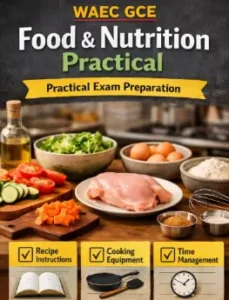
Students preparing for the WAEC GCE Food and Nutrition practical examination using fresh ingredients, cooking tools, and time-management checklist.
WAEC GCE Food and Nutrition Practical 2026/2027 – Exam Format
Understanding the structure of the practical exam helps students prepare effectively.
1. Practical Test Paper
Candidates are usually required to:
Prepare two or three dishes within a fixed time
Follow a given question or scenario (e.g., meal for a child, convalescent patient, or working adult)
Provide a written time plan and method before cooking
The dishes selected must reflect:
Nutritional balance
Variety in texture and colour
Appropriate cooking methods
2. Written Practical Report
After cooking, students must submit:
Menu plan
List of ingredients with measurements
Step-by-step cooking procedure
Time schedule
Nutritional justification of dishes
This written section contributes significantly to total marks.
Materials Needed for WAEC GCE Food and Nutrition Practical 2026/2027
Students should prepare the following:
Cooking Equipment
Pots, pans, and frying pans
Knives and chopping boards
Mixing bowls and spoons
Measuring cups and spoons
Baking trays or ovenproof dishes
Personal Items
Clean apron
Head cover or scarf
Hand towel
Serving plates
Proper preparation prevents loss of marks due to disorganization.
Marking Scheme for Food and Nutrition Practical
WAEC examiners typically award marks based on:
1. Planning (Menu, Time Plan, Ingredients)
Nutritional suitability
Correct measurements
Logical cooking order
2. Cooking Skills
Correct preparation methods
Proper heat control
Avoidance of food waste
3. Hygiene and Safety
Clean working area
Personal cleanliness
Safe handling of utensils and heat
4. Presentation and Serving
Attractive appearance
Correct portion size
Suitable garnishing
5. Written Report
Clear method and explanation
Nutritional knowledge
Proper organization
Strong performance in all sections is required for excellent grades.
READ ALSO:👇
⇒WAEC GCE Technical Drawing Syllabus 2026/2027 – Complete Exam Format
⇒WAEC GCE Financial Accounting past questions 2026/2027
⇒WAEC GCE Home Management past questions 2026/2027 Complete Update
Likely Practical Questions for 2026/2027
Although WAEC does not reveal exact questions, common themes include:
Balanced meal for a school-age child
High-protein dish for a convalescent patient
Energy-giving breakfast for a worker or student
Two-course meal using local ingredients
Baking task such as cake, pastry, or biscuits
Practicing these scenarios increases confidence during the exam.
Step-by-Step Guide to Menu Planning
1. Understand the Question
Identify:
Target person
Nutritional needs
Number of dishes required
2. Choose Suitable Dishes
Ensure:
Balance of protein, carbohydrate, vitamins, and minerals
Different cooking methods (boiling, frying, baking, steaming)
Colour and texture variety
3. Prepare a Time Plan
Arrange cooking steps from:
Longest cooking time
Medium preparation
Quick finishing dishes
Good timing prevents unfinished meals.
Best Preparation Tips for WAEC GCE Food and Nutrition Practical 2026/2027
Practice Cooking Regularly
Frequent practice improves:
Speed
Confidence
Presentation skills
Learn Basic Recipes Thoroughly
Focus on:
Soups and sauces
Rice and cereal dishes
Egg and milk recipes
Cakes and pastries
Maintain High Hygiene Standards
Always:
Wash hands properly
Keep utensils clean
Cover hair while cooking
Study Past Practical Questions
This helps students:
Understand exam patterns
Predict likely tasks
Improve planning skills
Common Mistakes Students Should Avoid
Poor time management
Choosing nutritionally unbalanced meals
Untidy kitchen space
Overcooked or undercooked food
Weak written practical report
Avoiding these errors can greatly improve final scores.
Importance of WAEC GCE Food and Nutrition Practical 2026/2027
The WAEC GCE Food and Nutrition practical 2026/2027 exam:
Tests real-life cooking ability
Encourages healthy meal preparation skills
Develops home management competence
Contributes a large percentage of total marks
Students who perform well in the practical often achieve overall distinction.
Frequently Asked Questions (FAQ)
How many dishes are prepared in WAEC Food and Nutrition practical?
Usually two or three dishes, depending on the question.
Is the written report compulsory?
Yes. It carries important marks and must be completed.
Can I use local ingredients?
Yes. WAEC often encourages the use of available local foods.
What is the best way to score high?
Practice cooking, plan menus correctly, and maintain excellent hygiene and presentation.
Is Food and Nutrition practical difficult?
No. With consistent practice and preparation, students can perform very well.
Conclusion
Success in the WAEC GCE Food and Nutrition Practical 2026/2027 depends on early preparation, strong cooking skills, good hygiene, and proper menu planning. Candidates who understand the exam format, practice regularly, and avoid common mistakes stand a high chance of achieving excellent grades.
By following the guidance in this article, students can approach the practical examination with confidence, organization, and the right nutritional knowledge needed for success.