WAEC GCE Agric Science Past Questions & Topics 2026/2027 – Complete Exam Success Guide
Get the complete WAEC GCE Agric Science past questions & topics for 2026/2027. Download, study tips, exam format, and expert strategies to pass easily.
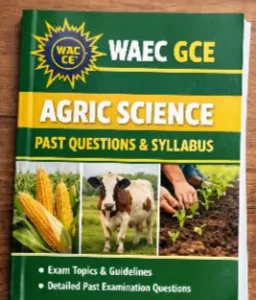
WAEC GCE Agric Science past questions and official syllabus for effective exam preparation
WAEC GCE Agric Science Past Questions & Topics 2026/2027
The WAEC GCE Agric Science examination is one of the most important science subjects for students preparing for external WAEC. Whether you are retaking the exam or writing it for the first time, studying WAEC GCE Agric Science past questions and topics for 2026/2027 gives you a massive advantage.
Agricultural Science is not just about farming. It covers crop production, animal husbandry, soil science, farm management, agricultural economics, and agricultural ecology. Many candidates fail because they read the wrong topics or ignore repeated questions. This guide solves that problem.
In this article, you will find:
Complete WAEC GCE Agric Science topics
Commonly repeated past questions
Exam format
Smart study strategies
How to score A1–B3 in Agric Science
Why You Must Study WAEC GCE Agric Science Past Questions
Past questions are not optional — they are a secret weapon.
WAEC often repeats:
Question patterns
Diagrams
Practical tasks
Essay topics
By studying WAEC GCE Agric Science past questions, you will:
Understand the exam structure
Know what topics WAEC values most
Learn how questions are framed
Improve speed and accuracy
Predict likely exam questions
Over 70% of WAEC GCE Agric questions come from the same topic areas every year.
WAEC GCE Agric Science Exam Format
The WAEC GCE Agric Science exam consists of three papers:
Paper 1 – Objective (Multiple Choice)
50 questions
1 hour
Covers all topics
Paper 2 – Essay
Short answers
Long essays
Diagrams
Paper 3 – Practical
Specimens
Farm tools
Soil samples
Crop and animal identification
To pass Agric Science, you must perform well in all three sections.
Complete WAEC GCE Agric Science Topics 2026/2027
Below are the officially tested areas based on WAEC trends:
1. Introduction to Agriculture
Meaning and importance of agriculture
Types of farming
History of agriculture
Branches of agriculture
2. Agricultural Ecology
Ecosystem
Climate and weather
Soil formation
Crop adaptation
3. Soil Science
Soil types
Soil fertility
Soil conservation
Soil erosion
Soil profile
4. Farm Tools and Machinery
Simple tools
Mechanical tools
Maintenance of farm tools
5. Crop Production
Land preparation
Planting methods
Harvesting
Storage
Pest and disease control
6. Crop Improvement
Plant breeding
Hybridization
Seed selection
7. Animal Production
Types of farm animals
Housing
Feeding
Breeding
Health management
8. Livestock Management
Poultry
Cattle
Sheep
Goats
Fishery
9. Agricultural Economics
Demand and supply
Farm budgeting
Marketing of farm produce
10. Agricultural Extension
Role of extension workers
Communication methods
11. Farm Records and Accounts
Profit and loss
Farm inventory
Why Agriculture is important as a Subject
Agriculture is important as a subject because it connects education to real life, food security, economic growth, and self-reliance. It is not just about farming—it is about understanding how humans survive, earn a living, and protect the environment.
Here are the key reasons why Agriculture is important as a subject:
1. It Provides Food for the Population
Agriculture teaches how food is produced. Every grain of rice, tuber of yam, egg, milk, or vegetable comes from agriculture. Studying this subject helps students understand how to grow crops and rear animals to prevent hunger and starvation.
Without agriculture, there would be no food.
2. It Creates Employment
Agriculture is one of the largest employers in the world. Through this subject, students learn skills that can lead to careers such as:
Farming
Agribusiness
Veterinary services
Fisheries
Food processing
Agricultural engineering
This reduces unemployment and poverty.
3. It Supports National Economy
Many countries, including Nigeria, earn a large part of their income from agricultural products like cocoa, palm oil, groundnuts, and rubber. Studying Agriculture helps students understand how these products are produced, processed, and sold to support the nation’s economy.
4. It Promotes Self-Reliance
Agriculture teaches practical skills. A student who studies Agriculture can grow crops, rear animals, and even start a small farm. This makes them independent and less dependent on white-collar jobs.
5. It Teaches Environmental Protection
The subject explains soil conservation, crop rotation, and sustainable farming. These practices help protect land, water, and forests for future generations.
6. It Encourages Scientific Thinking
Agriculture involves biology, chemistry, and economics. Students learn how plants grow, how animals are fed, and how farm businesses are managed. This builds problem-solving and scientific skills.
7. It Improves Nutrition and Health
By studying Agriculture, students learn how to produce balanced food like vegetables, fruits, meat, and grains. This helps improve health and prevent malnutrition.
8. It Prepares Students for Further Studies
Agriculture is the foundation for careers in:
Medicine
Veterinary science
Food science
Environmental science
Biotechnology
SEE ALSO:
⇒WAEC GCE Literature in English Syllabus 2026/2027 Complete Topics
⇒WAEC GCE Civic Education Syllabus 2026/2027 Exam Format
Frequently Repeated WAEC GCE Agric Science Past Questions
These are common past question patterns WAEC repeats:
Objective Questions
What is soil erosion?
Which crop is propagated by stem cutting?
What tool is used for weeding?
Which animal is a ruminant?
Essay Questions
Explain five methods of soil conservation
Describe the digestive system of a cow
Outline the process of crop rotation
State the importance of agriculture to Nigeria
Practical Questions
Identify this farm tool
State two uses
Identify this soil type
Name this crop
WAEC has repeated these questions in different forms for over 10 years.
How to Use Agric Science Past Questions to Score A1
Here is a proven strategy:
Step 1: Study Topics First
Understand the syllabus before jumping into past questions.
Step 2: Solve Past Questions
Do at least 10 years of past questions.
Step 3: Check Marking Scheme
WAEC uses strict marking points. Learn how answers are graded.
Step 4: Practice Practical Diagrams
Learn how to draw farm tools, animals, and crops.
Recommended Textbooks for WAEC GCE Agric Science
To improve your understanding, use:
Essential Agricultural Science
Modern Agricultural Science
WAEC Agric Science Past Questions Book
These books explain topics in simple language.
Common Mistakes Candidates Make
Ignoring practicals
Skipping diagrams
Studying without past questions
Memorizing instead of understanding
Avoid these mistakes to score high.
Final Tips for WAEC GCE Agric Science 2026/2027
Start early
Use past questions
Revise daily
Practice diagrams
Study crop and animal specimens
Conclusion
The WAEC GCE Agric Science past questions and topics 2026/2027 are your best tools for success. When you understand the topics and practice repeated questions, you greatly increase your chances of passing with distinction.
This subject is not difficult when studied the right way. Use this guide, stay consistent, and success is guaranteed.